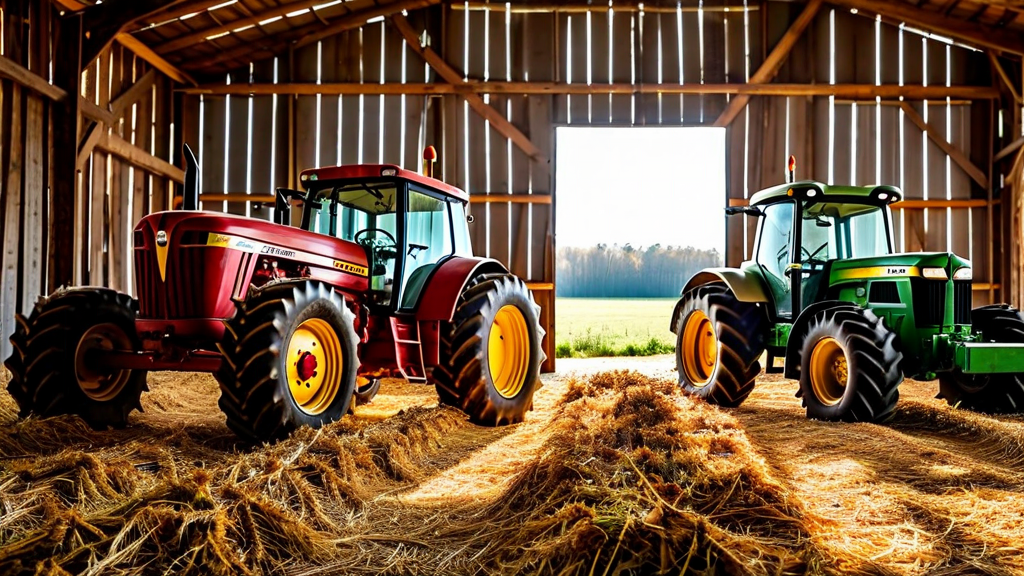
The average age of farm machinery in the United States is over twelve years, and the average cost of replacing a modern combine or planter with a precision-capable equivalent runs into hundreds of thousands of dollars. For most farm operations — and especially for smaller and mid-size farms operating on tight margins — the expectation that adopting precision agriculture technology requires wholesale fleet replacement is a powerful barrier to entry. The good news is that it is largely a false expectation. The modern AgriTech ecosystem has evolved specifically to work alongside existing equipment, and the integration options available today make it possible to extract meaningful data and precision control from tractors, planters, and harvesters that predate the smartphone by decades.
This piece examines the practical pathways for connecting legacy farm equipment to modern farm management software platforms — the hardware bridges, communication protocols, and software approaches that make integration possible — and discusses the realistic expectations and limitations that farm operators should understand before investing in a legacy integration program.
Understanding What Legacy Equipment Can and Cannot Provide
The first step in planning a legacy equipment integration program is honest assessment of what each piece of equipment can realistically contribute to a digital farm management system. Farm machinery manufactured since approximately 2004 typically includes an ISOBUS (ISO 11783) controller area network (CAN) bus interface — the agricultural industry standard for electronic communication between tractors, implements, and in-cab displays. Equipment with ISOBUS support can potentially share operational data including engine parameters, fuel consumption, ground speed, and in some cases implement-specific data such as seeding rate or application rate. Accessing this data requires either a compatible display terminal or an aftermarket telematics device that connects to the ISOBUS diagnostic port.
Equipment manufactured before 2004, and some equipment from the 2004-2010 period that predates widespread ISOBUS adoption, may have no standardized electronic interface at all, or may use proprietary CAN bus implementations that require manufacturer-specific diagnostic tools. For this class of equipment, integration options are more limited: GPS tracking and mapping can still be added through aftermarket GNSS receivers and field computer systems, but real-time operational data from the equipment's onboard systems may not be accessible without significant reverse engineering or dealer-provided diagnostic access.
Retrofit Precision Control Systems
The most transformative category of legacy integration hardware is retrofit precision control — systems that add GPS-guided variable-rate capability to older planters, fertilizer applicators, and sprayers. Retrofit variable-rate drive systems replace the existing mechanical drive train on a planter or seeder with electric or hydraulic actuators controlled by a field computer loaded with a prescription map, enabling the machine to vary its output rate based on GPS position regardless of whether the implement itself has any native electronic capability.
Commercial retrofit systems from companies including Precision Planting, Ag Leader, and Raven Industries can add individual row shutoff, variable-rate seeding, and downforce control to planters that originally had none of these capabilities. The cost of a full retrofit on a 16-row planter runs from approximately forty to eighty thousand dollars — significant, but a fraction of the cost of a new precision planter and typically recoverable within two to four seasons through seed savings on variable-rate prescriptions and stand uniformity improvements. Similar retrofit options exist for anhydrous ammonia applicators, dry fertilizer spreaders, and liquid sprayers, allowing virtually any applicator to execute variable-rate prescriptions from a farm management platform.
Telematics Devices and Fleet Visibility
Even without variable-rate control capability, adding telematics visibility to an existing equipment fleet provides immediate value for fleet management, utilization analysis, and field record-keeping. Aftermarket telematics devices — compact units that connect to the ISOBUS diagnostic port or to a standard OBDII-style diagnostic connector — transmit GPS location, engine hours, fuel consumption, and operational status data to cloud platforms via cellular network. These devices typically cost one hundred to three hundred dollars each and require a monthly data subscription of fifteen to thirty dollars per unit.
Fleet telematics data feeds directly into farm management software platforms where it enables automatic field operation logging — the system records which fields were worked, when operations occurred, how many acres were covered, and at what fuel consumption — without requiring any manual data entry by the equipment operator. For farms that have struggled with incomplete or inaccurate field record-keeping, automatic telematics-based operation logging is often cited as one of the highest-value precision agriculture investments they have made, because it creates the historical record of field activities that makes retrospective analysis of management decisions possible.
GNSS Guidance and Auto-Steer Retrofits
GPS-guided auto-steer systems can be retrofitted to virtually any tractor manufactured in the past thirty years. Electric motor retrofit steering kits that mount over the steering column and connect to a GNSS receiver and field computer are available for tractors without hydraulic steering interfaces. For tractors with hydraulic power steering, more capable hydraulic auto-steer systems can be installed through the steering circuit, providing centimeter-level accuracy with RTK correction and the ability to execute straight-line, curved, and headland turns with minimal operator input.
The productivity and agronomic benefits of auto-steer guidance — reduced overlap, more consistent row spacing, ability to work in poor visibility conditions, reduced operator fatigue — are well documented. Typical overlap reduction from auto-steer adoption on planting and tillage operations runs from five to fifteen percent, representing direct savings in seed, fertilizer, and fuel that compound over a farm's entire operation. Retrofit auto-steer systems capable of sub-inch accuracy with RTK correction are available for fifteen to thirty thousand dollars installed, compared to the forty to eighty thousand dollar premium of equivalent factory-installed systems on new equipment.
Farm Management Software Integration Strategies
Once data from legacy equipment is flowing through telematics devices and retrofit sensors, integrating it into a unified farm management software platform requires attention to data format compatibility and workflow design. The agricultural industry has made significant progress on data standardization through initiatives like ADAPT (Agricultural Data Application Programming Toolkit) and the AEF (Agricultural Industry Electronics Foundation) ISOBUS certification program, but full interoperability between equipment from different manufacturers and different farm management software platforms remains a work in progress.
Practical integration strategies for farms with mixed equipment fleets include selecting a farm management platform with broad telematics integration support — most leading platforms including John Deere Operations Center, CNH MyPLM Connect, and third-party platforms like Granular, Trimble Ag Software, and the Brilliant Harvest platform support data import from the major telematics providers through standardized APIs. Custom data bridges built on platforms like ADAPT are an option for farms with unusual equipment combinations, and several agricultural data services companies offer integration consulting for farms with complex multi-brand fleets that do not connect cleanly through standard pathways.
Data Quality and Calibration Considerations
A common pitfall in legacy equipment integration programs is deploying hardware and software without adequate attention to calibration and data quality. A yield monitor on a combine that has not been calibrated to the current crop and moisture conditions will produce plausible-looking data that is actually systematically biased — and yield maps generated from that data will mislead management decisions for years. Similarly, a flow controller on a fertilizer applicator that has not been calibrated for the current product density and application rate will execute prescriptions inaccurately, negating the precision advantage the variable-rate system was installed to provide.
Rigorous calibration protocols, documented in the farm management platform and repeated at the start of each season and when switching crops or products, are essential to extracting reliable data from legacy equipment integrations. Several modern farm management platforms include calibration documentation features that record calibration events, track the history of calibration settings, and alert operators when calibration is due based on hours of operation or elapsed time. Building a culture of disciplined calibration is arguably as important as the hardware investment itself.
Key Takeaways
- Fleet replacement is not a prerequisite for precision agriculture — retrofit integration pathways exist for equipment of virtually any age.
- ISOBUS-equipped tractors and implements from approximately 2004 onward can share operational data with farm management platforms through telematics devices.
- Retrofit variable-rate drive systems add prescription-based control to older planters and applicators at a fraction of new equipment cost.
- Auto-steer retrofit systems deliver five to fifteen percent overlap reduction and significant operator productivity benefits at costs well below new precision-equipped equipment.
- Data standardization through ADAPT and ISOBUS improves cross-platform compatibility, but custom integration support is sometimes needed for complex mixed-brand fleets.
- Calibration discipline is essential — hardware integration without rigorous calibration protocols produces unreliable data that undermines management decision quality.
Conclusion
The integration of modern farm management software with legacy equipment is a practical, proven path to precision agriculture adoption that does not require the financial commitment of a full equipment fleet upgrade. The retrofit systems, telematics devices, and software integration capabilities available today make it possible for farms at every scale and economic position to start building the data infrastructure that underlies sustainable, efficient, and competitive agriculture. The key is approaching integration systematically — assessing each piece of equipment honestly, choosing the integration options that fit the farm's specific operational and economic context, and investing in calibration and data quality to ensure that the resulting data is trustworthy enough to guide important management decisions.